
Thailand, Cambodia Set for Border Ceasefire Pact as ASEAN Leaders Gather in Kuala Lumpur
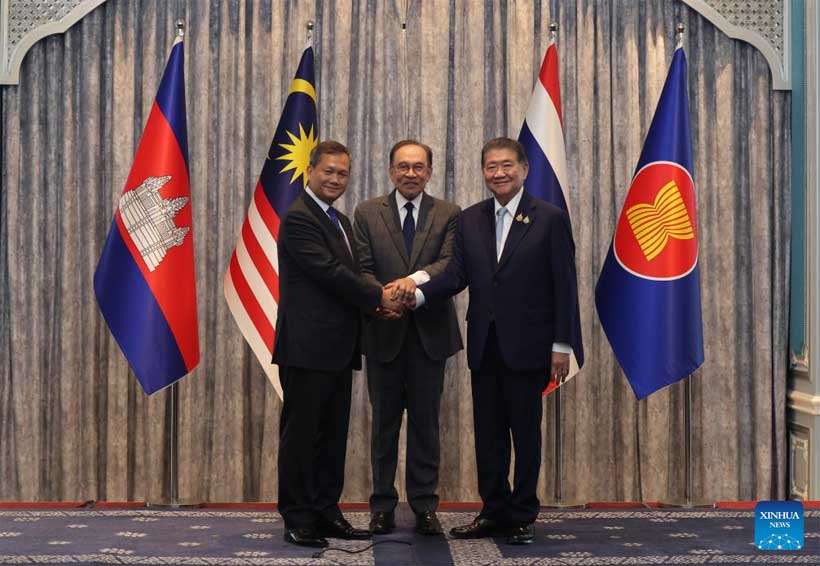
Malaysia’s Foreign Minister Mohamad Hasan announced Tuesday that Thailand and Cambodia are expected to sign a ceasefire agreement during the upcoming ASEAN leaders’ summit in Kuala Lumpur, scheduled for October 26–28. The deal, to be facilitated jointly by Malaysia and the United States, aims to end months of border hostilities that erupted in July, marking the deadliest confrontation between the two Southeast Asian neighbors in more than a decade.
The clashes broke out over undemarcated sections of the 817-kilometer border, leaving at least 48 people dead and displacing hundreds of thousands on both sides. Sporadic fighting and shelling had continued despite earlier mediation efforts, straining regional stability ahead of the ASEAN summit.
Why It Matters
The ceasefire marks a crucial test for ASEAN’s role in regional conflict resolution, coming at a time when the bloc faces mounting criticism for its limited effectiveness in managing internal disputes, including the Myanmar crisis. For Thailand and Cambodia, the agreement offers a potential path to de-escalation and border normalization, which are vital for trade, tourism, and cross-border livelihoods.
The involvement of Malaysia and the United States adds diplomatic weight to the negotiations, reflecting growing international concern over Southeast Asia’s fragile peace and the need to prevent localized conflicts from undermining broader regional cooperation.
The primary actors are the governments of Thailand and Cambodia, whose border dispute has deep historical and political roots. Malaysia plays a key mediating role as ASEAN chair and host of the summit, while the United States lends international legitimacy and technical support to the talks. Other ASEAN members are closely monitoring the outcome as a precedent for future intra-bloc conflict management.
Local communities along the border many of whom depend on cross-border trade and agriculture remain among the most directly affected stakeholders, bearing the brunt of displacement and instability.
What’s Next
If successfully signed, the ceasefire is expected to pave the way for joint border demarcation talks and potentially a monitoring mechanism under ASEAN oversight. Diplomats say Malaysia is working to secure a framework for post-conflict reconstruction and humanitarian assistance in affected areas.
Observers will be watching whether Thailand and Cambodia can translate the ceasefire into a sustained peace process, or if unresolved territorial claims risk reigniting tensions once ASEAN’s spotlight fades.